

Heritage Surveyors in Dorset
Six Heritage provides specialist heritage surveying services across Dorset, supporting property owners, architects, and developers in making sound, conservation-led decisions about historic and Listed buildings. From the thatched cob villages of the Blackmore Vale to the Portland stone settlements of the south coast, Dorset contains some of England’s most varied and demanding traditional building stock. We provide impartial, evidence-based assessments tailored to the county’s distinct materials and planning environment.
Heritage Surveying Services Across Dorset
Our surveys cover the full range of assessments required for historic and Listed buildings, including Historic & Listed Building Surveys, Timber Condition Surveys, and Damp Surveys. We combine traditional building knowledge with modern diagnostic equipment, including FLIR thermal imaging, videoscope inspection and resistance drilling, to identify root causes rather than surface symptoms. As an independent practice with no ties to contractors or treatment companies, our recommendations are driven entirely by what is best for the building and its owner.
Surveying Dorset's Varied Traditional Materials
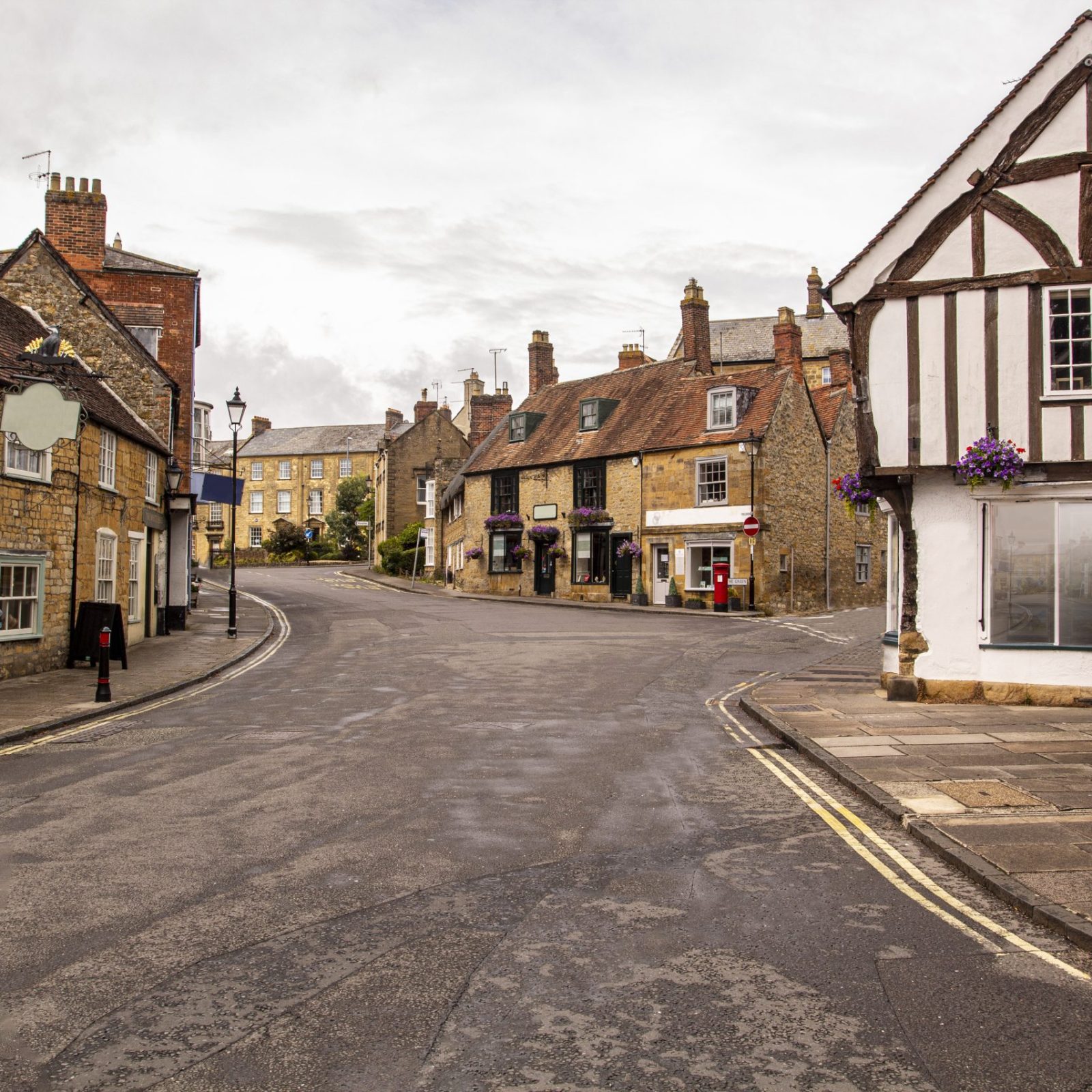
With nearly 13,000 listed buildings spread across 190 conservation areas, our surveyors are constantly adapting to Dorset’s highly varied geology. Each of which produces several distinct building traditions requiring different diagnostic expertise.
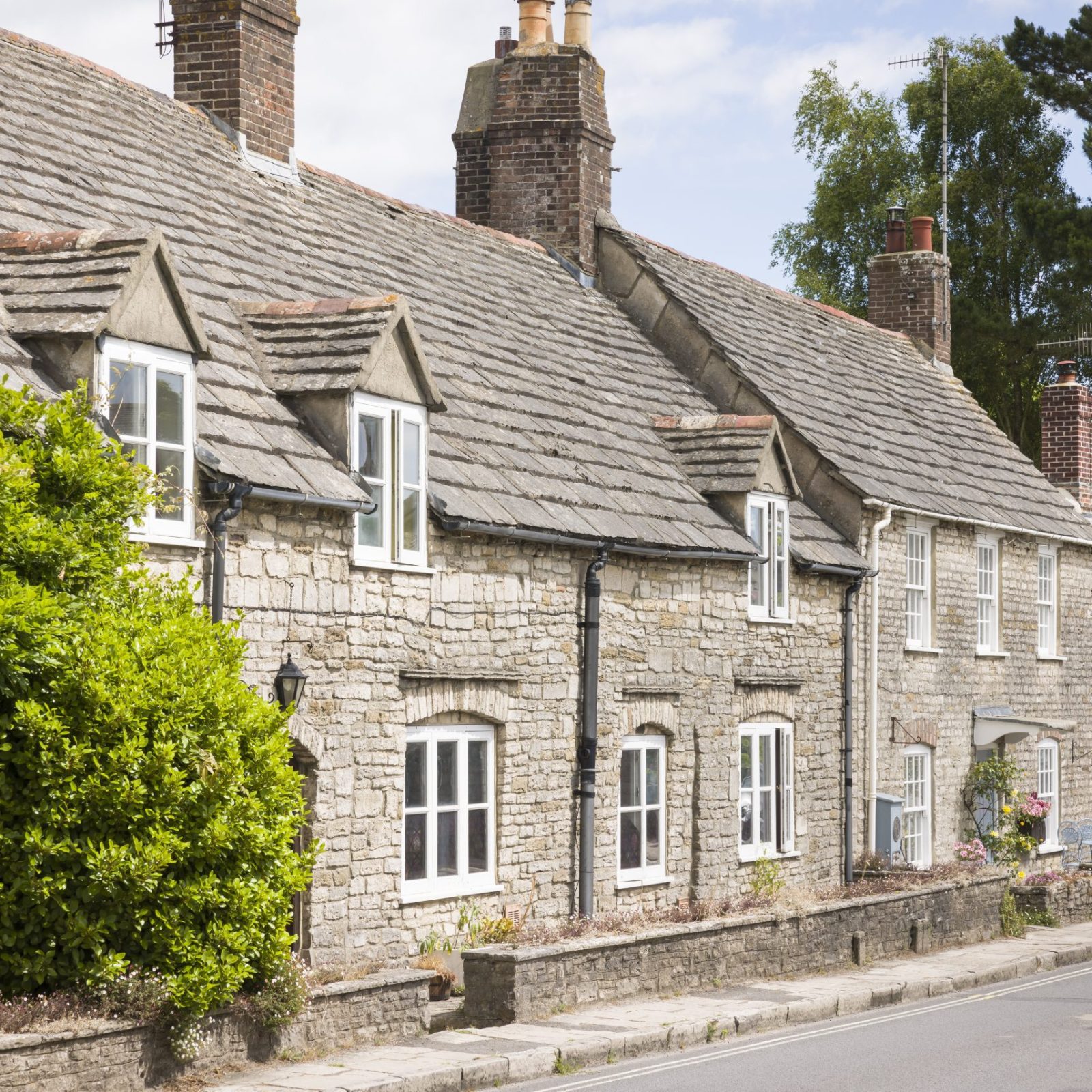
Portland stone, quarried on the Isle of Portland since the Roman period and used to build St Paul’s Cathedral, dominates in the south of the county. Purbeck limestone appears throughout the Isle of Purbeck and around Wareham and Corfe Castle, while golden Ham Hill stone characterises the west around Sherborne and Beaminster. In the Cranborne Chase area, knapped flint construction is common, often combined with brick dressings and lime mortar pointing.
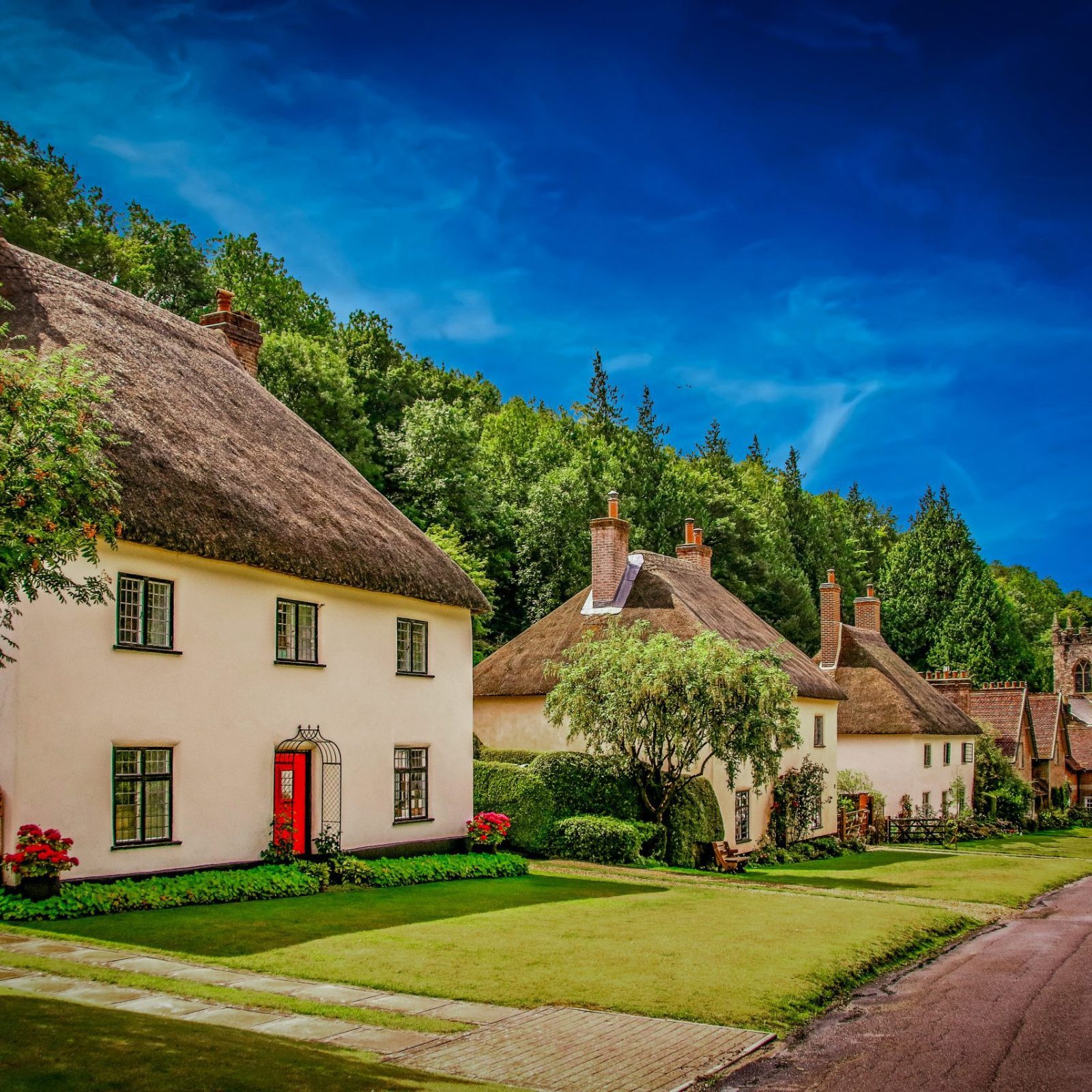
Central and north Dorset have a high concentration of cob buildings. Cob is an earth-and-straw construction material that performs well when kept dry, but its survival depends entirely on breathability. A cob wall that is cement-pointed, tanked, or chemically injected will not dry out, and the consequences can be severe: moisture becomes trapped within the wall mass, the structure softens, and failure can follow. We regularly encounter cob buildings where well-intentioned but inappropriate past repairs have caused more damage than the original defect ever would have.
Dorset also holds approximately 12% of England’s listed thatched buildings, concentrated in the Blackmore Vale, the Piddle and Frome valleys, and coastal villages such as Burton Bradstock and Worth Matravers. Thatched properties require specialist assessment of the underlying timber structure, particularly where moisture has tracked from the ridge or through failing eaves into wall plates and rafters.
Local Conservation Challenges
Navigating the planning environment in this region means working closely with conservation teams at both Dorset Council and BCP Council. Both operate within a planning environment shaped by a high density of conservation areas and listed building designations, alongside the Dorset National Landscape and the Cranborne Chase National Landscape, which together impose additional restrictions on works affecting character and appearance.
Rebuilt almost entirely by local architect-surveyors John and William Bastard following a catastrophic fire in 1731, the centre of Blandford Forum was famously described by architectural historians John Newman and Nikolaus Pevsner as “one of the most satisfying Georgian ensembles anywhere in England” (Newman & Pevsner 1972, 95). This legacy leaves a streetscape of exceptional architectural consistency subject to careful conservation controls.
The Jurassic Coast UNESCO World Heritage Site, which runs from Exmouth to Old Harry Rocks at the eastern tip of Dorset, adds a further layer of heritage significance for coastal properties. Buildings near the cliff line or within the setting of designated sections of the coastline may require heritage recording surveys and impact assessments as part of any planning submission.

Working with Conservation Officers and Planning Teams
Our reports are prepared to support the requirements of Dorset Council and BCP Council conservation officers, and to underpin applications for Listed Building Consent and planning permission. We produce condition reports, heritage statements, and method statements aligned with Historic England’s guidance and BS 7913, providing planning authorities with the technical evidence they need to determine applications efficiently. Our experience with comparable planning environments across southern England means we understand what conservation officers require and how to present findings clearly.
Our Diagnostic Approach
Each survey produces a detailed technical report tailored to the property and the client’s objectives. Typical deliverables include comprehensive photographic records, electronic moisture profiling undertaken to BRE Guidance Note 245, timber decay diagnosis using specialist imaging and drilling, and masonry condition assessment with evaluation of mortar compatibility. Where defects are identified, we explain the underlying cause and provide practical repair guidance specifying appropriate materials and minimal-intervention strategies. Reports are formatted to support planning applications, remedial works specifications, and long-term conservation management.


Supporting Dorset Homeowners, Architects, and Estates
We work with private homeowners purchasing or maintaining Listed properties, architects preparing conservation-led repair schemes and extension proposals, developers adapting historic agricultural buildings for new uses, and estate managers overseeing multiple heritage assets. A typical instruction might involve a pre-purchase assessment of a Grade II* farmhouse near Sherborne, a combined timber and damp survey of a cob cottage in the Blackmore Vale following persistent moisture ingress, or a heritage recording survey required as a planning condition for works within a Blandford Forum conservation area. In every case, our role is to provide clear, impartial advice grounded in technical evidence.
Get in Touch with Our Dorset Heritage Surveyors
If you require a heritage surveyor in Dorset, Six Heritage provides specialist assessments for historic and Listed buildings across the county. Our conservation-led surveys are tailored to Dorset’s materials, planning context, and conservation priorities.