We are available throughout the Christmas period. Don't hesitate to enquire today.

Under the lamp

Case study

In September 2025 Six Heritage carried out an external chimney-stack condition survey to assess the construction, condition, and vulnerability of high-level masonry chimneys forming part of a Grade II listed historic building within the Godalming Town Centre Conservation Area.

Author

Matthew Amis

Service

External chimney-stack condition survey including drone-assisted inspection, material assessment, risk appraisal, and conservation-led repair recommendations

Completion

September 2025

Client

Twentyshire Investment Ltd

Church House, Godalming, Surrey

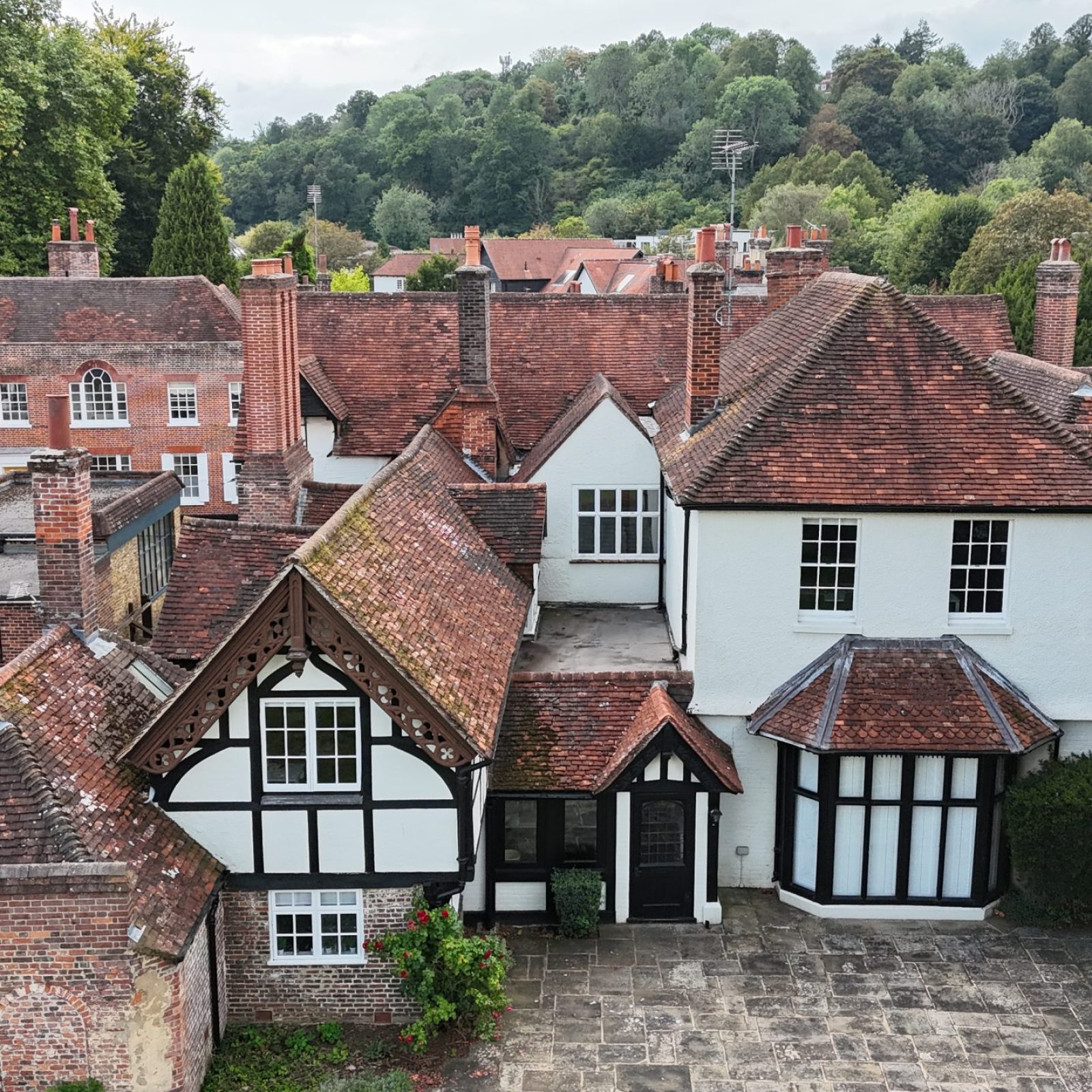
Church House is a Grade II listed historic building located on Church Street, Godalming, with origins dating to the 16th and 17th centuries and later phases of extension and alteration through the 19th and 20th centuries. The building retains a prominent and varied roofscape punctuated by multiple masonry chimney-stacks, reflecting its long and evolving domestic use.

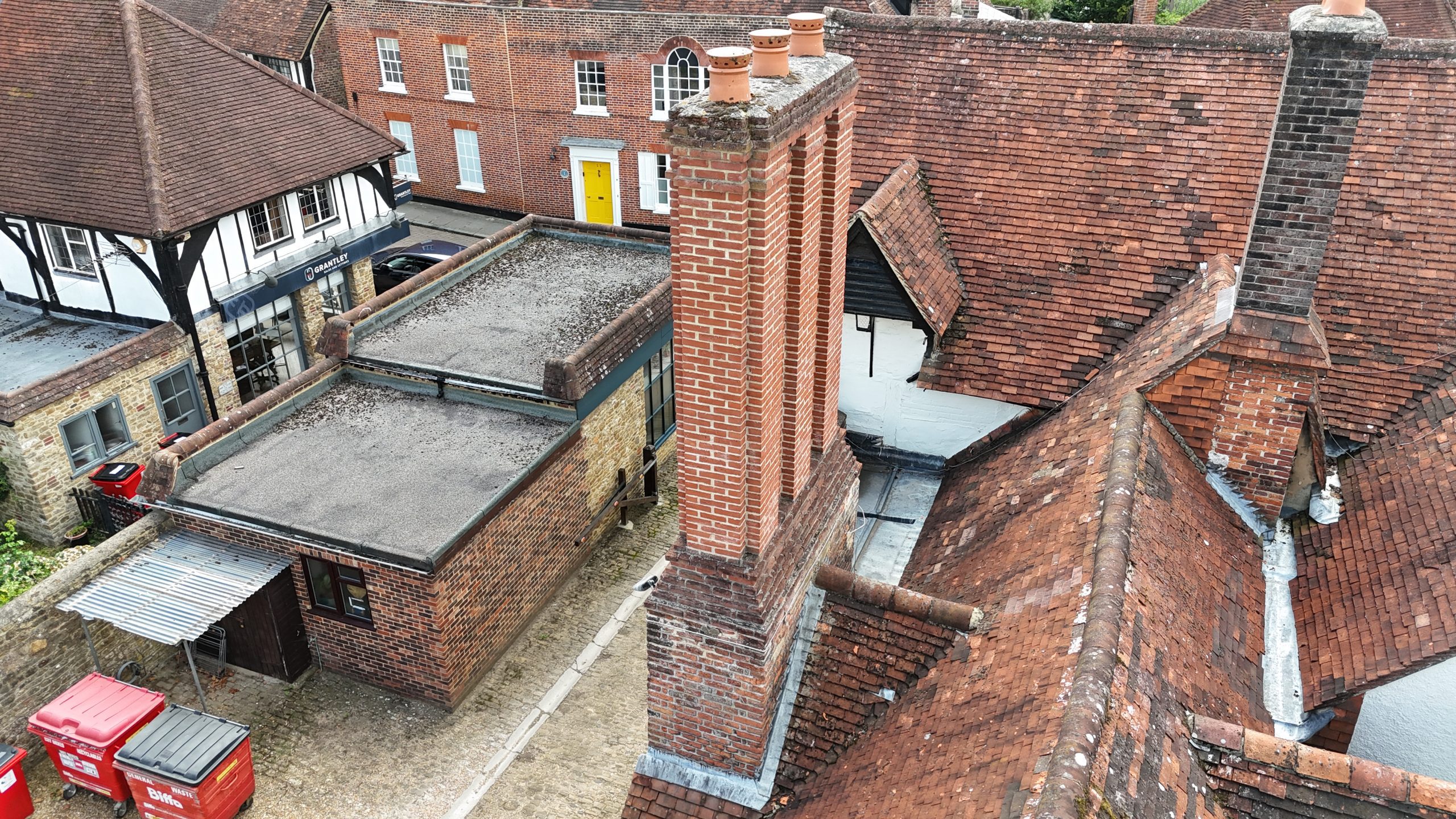
Six Heritage was instructed to assess the condition of the external chimneys following concerns regarding weathering, biological growth, and the long-term stability of high-level masonry elements. Due to access limitations and the risks associated with working at height, the survey adopted a non-intrusive methodology combining visual inspection from ground level with detailed drone photography and videography.

This approach allowed for a comprehensive assessment of six principal chimney-stacks, identifying construction typologies, historic alterations, and areas of increased vulnerability without the need for scaffolding or physical intervention.
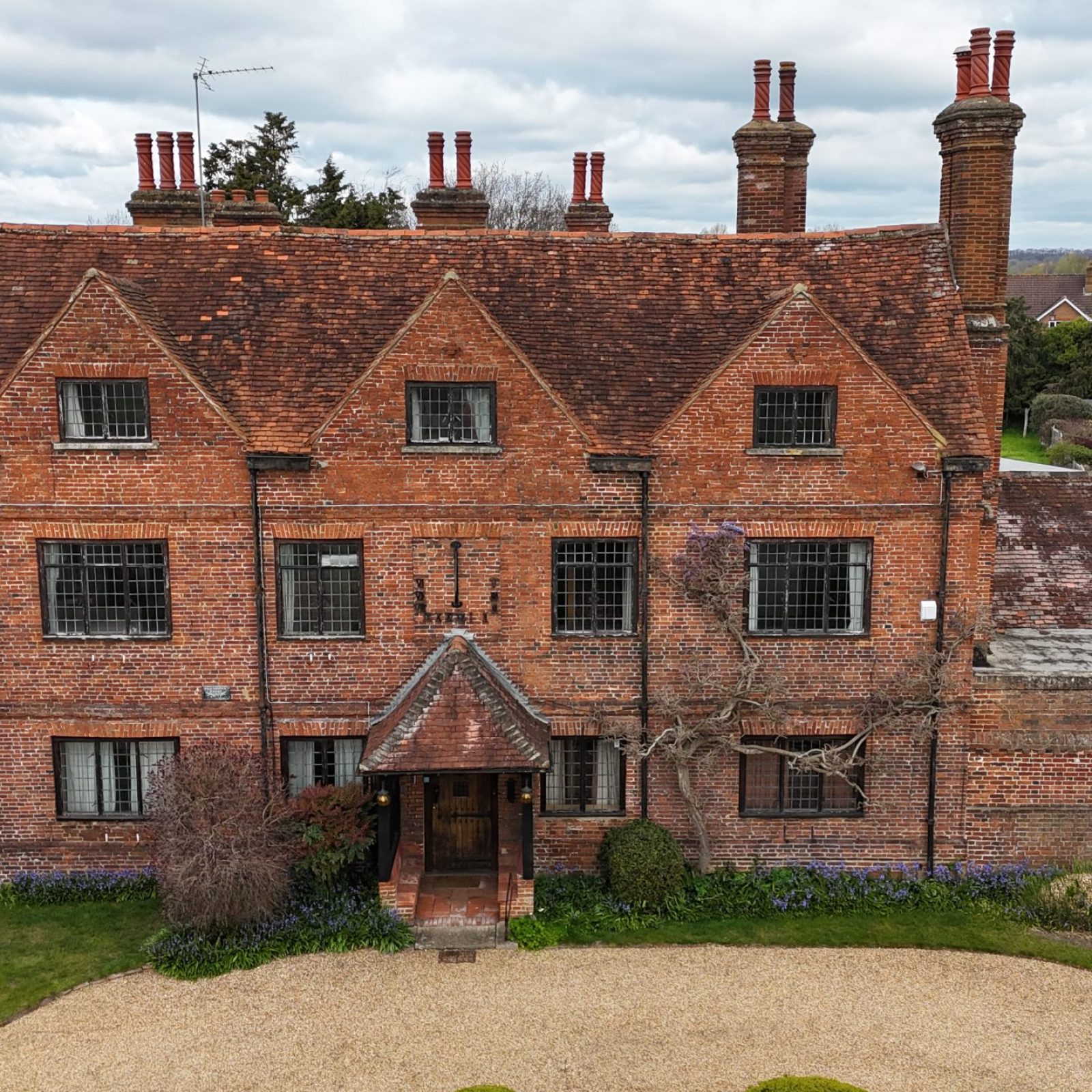
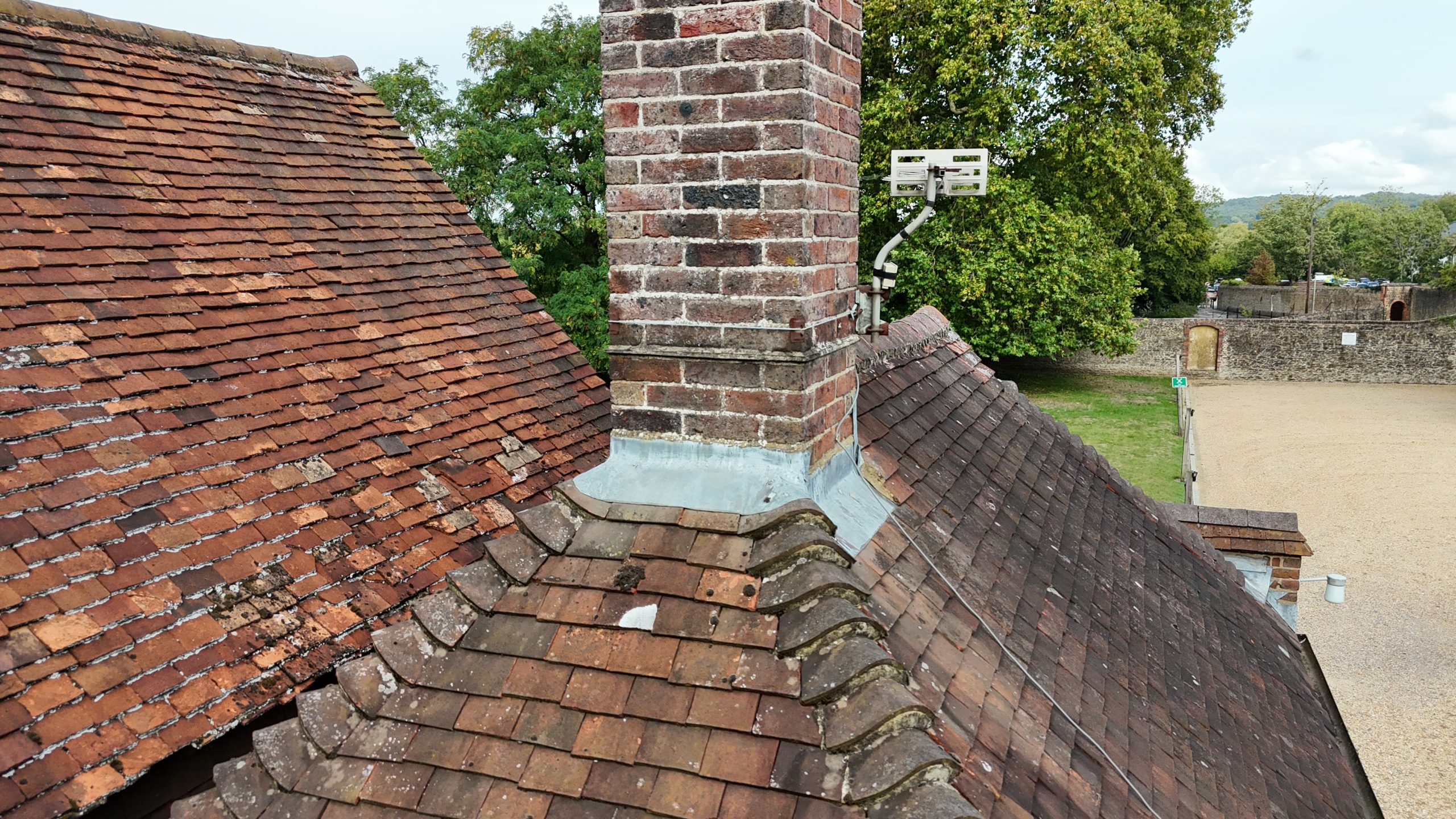
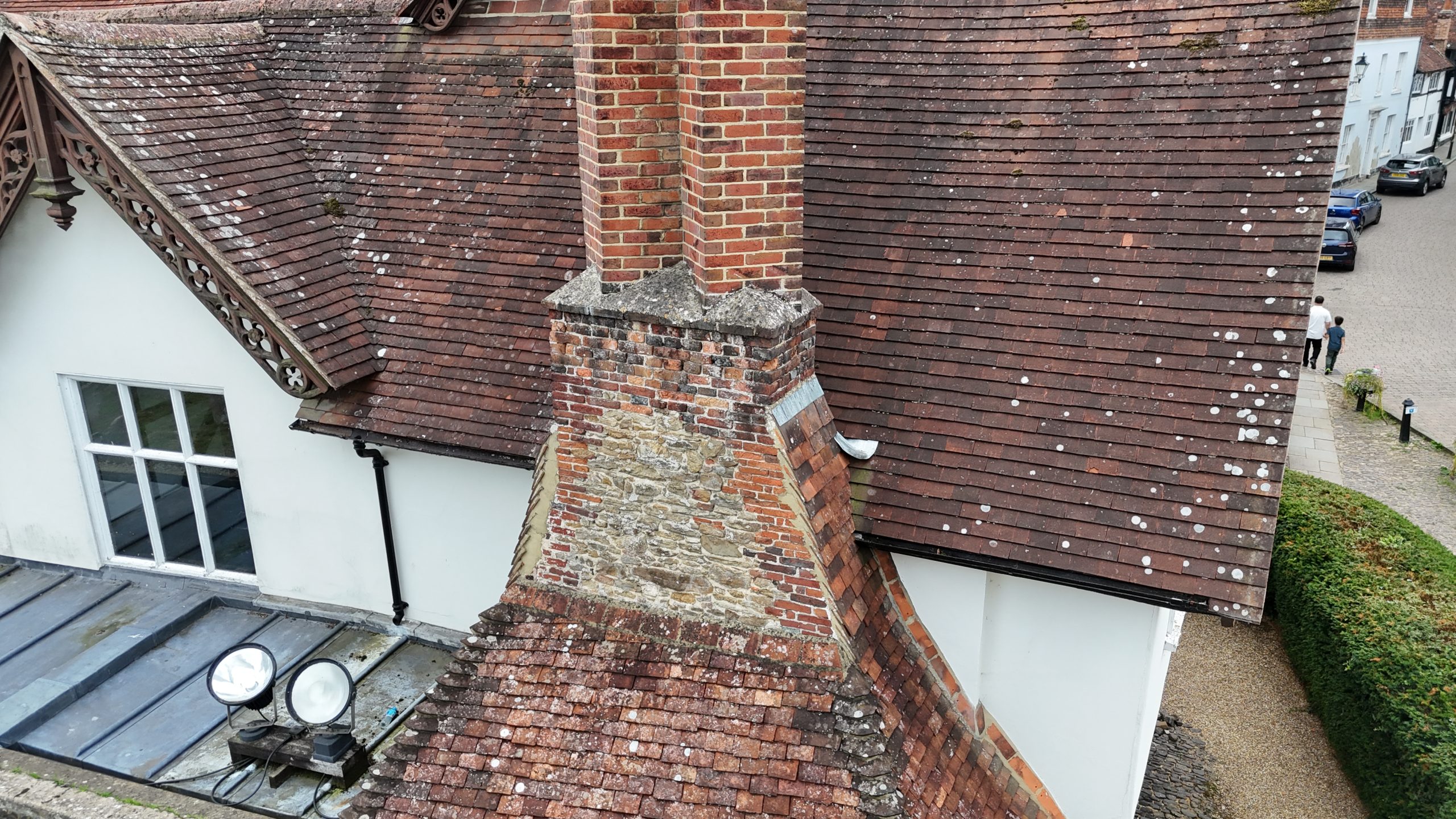
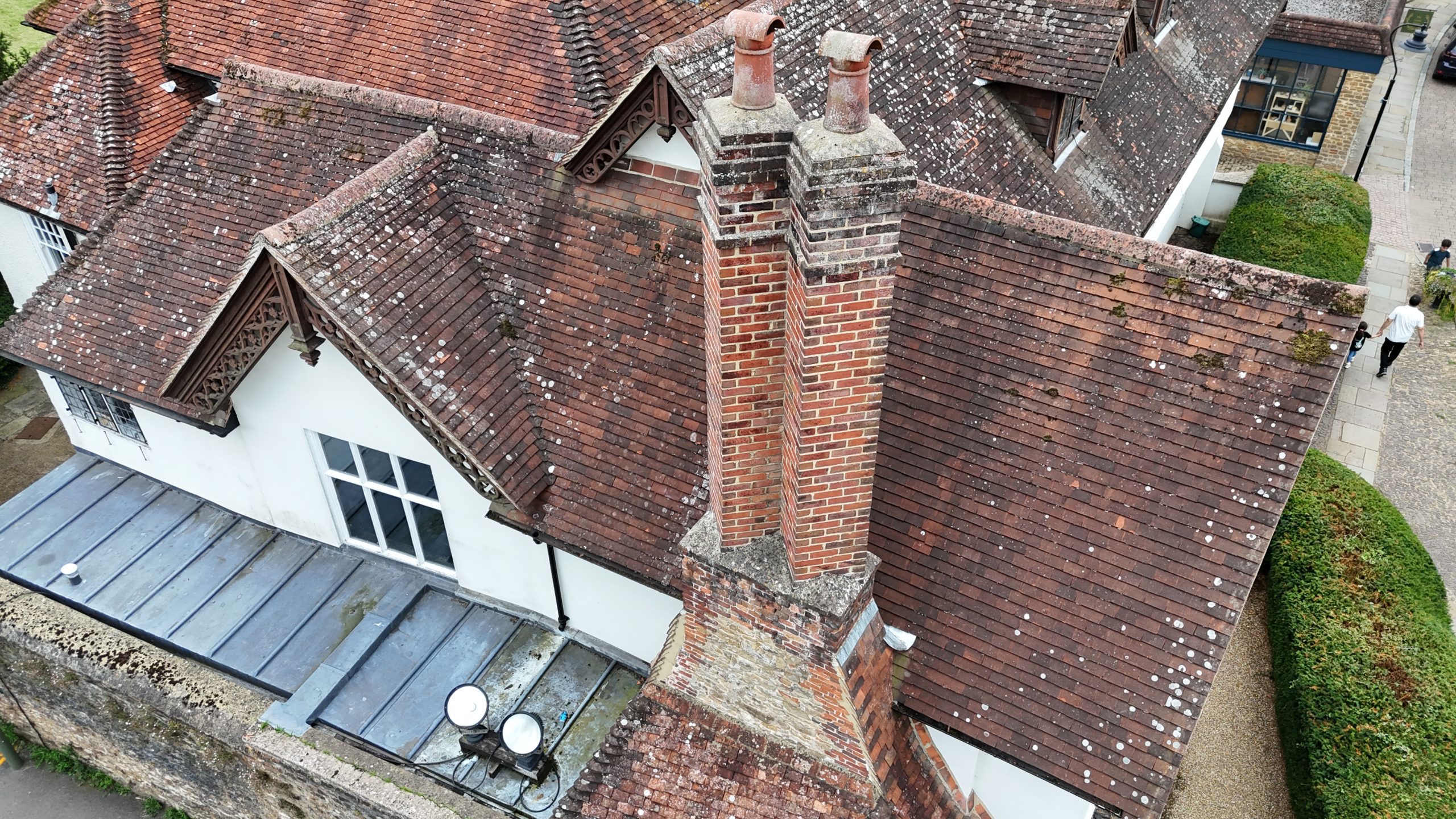
The chimney-stacks were typically constructed in red brick laid in a variety of bonds, with evidence of phased rebuilding, re-pointing, and partial replacement over time. Several stacks incorporated historic rubble or stone bases at lower levels, indicative of earlier construction phases retained beneath later brickwork.

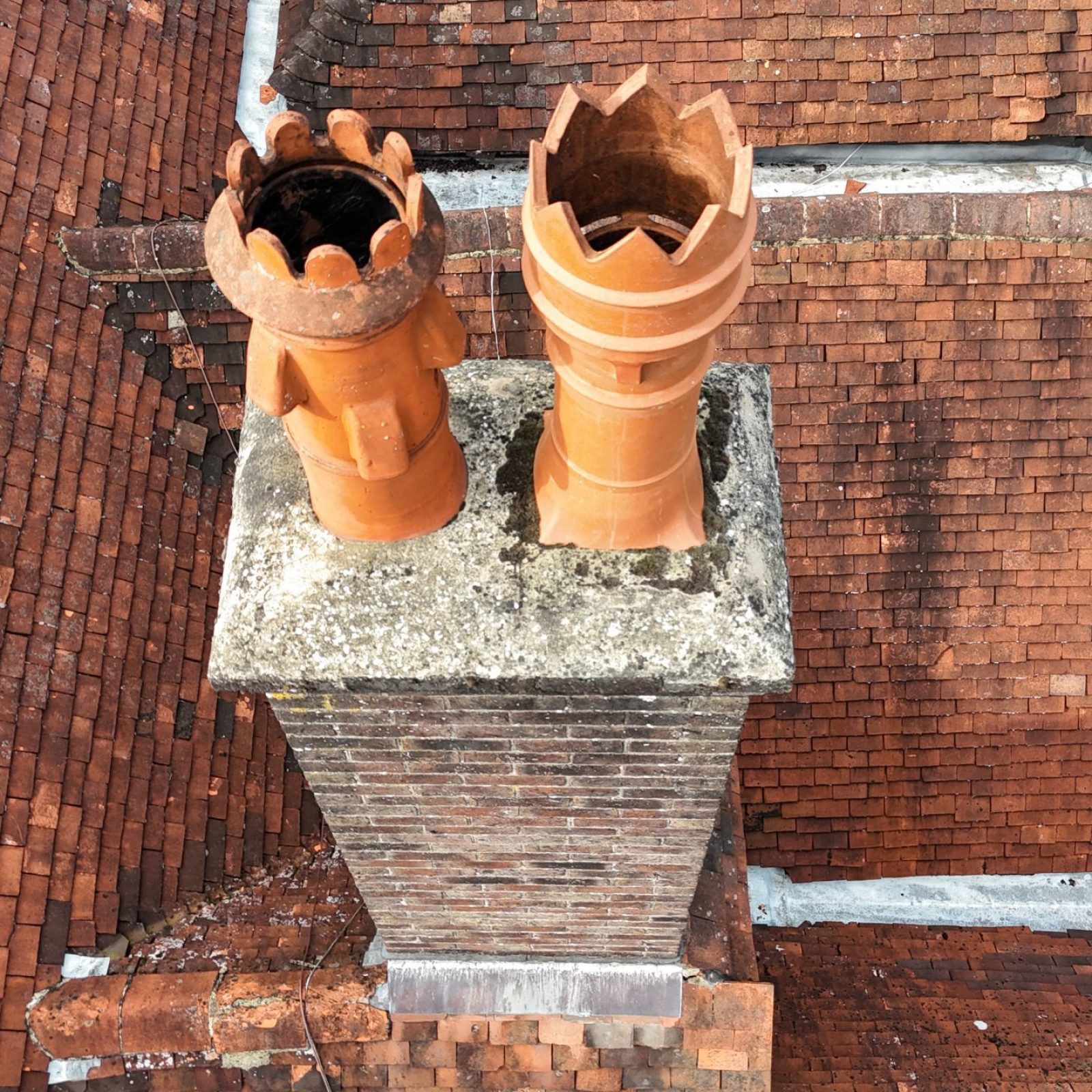
Overall, the chimneys were found to be in reasonable to good condition relative to their age. However, common defects were identified across the roofscape, including missing cowling to open flues, localised loss of mortar, biological growth in the form of lichen, and debris accumulation at flashing junctions. These defects increased the risk of intermittent water ingress, reduced drying capacity, and accelerated weathering of exposed masonry.

One chimney-stack displayed a visible misalignment or twist at high level. While no cracking or active movement was observed, the condition was identified as requiring further review by a Structural Engineer as a precautionary measure.

Church House, Godalming, Surrey

The survey concluded that wholesale replacement of chimney-stacks was not required. Instead, Six Heritage recommended a programme of targeted, conservation-led maintenance works, including the installation of ventilated cowling, careful removal of biological growth, localised re-pointing using appropriate lime mortars, and the removal of redundant fixings.

By addressing these issues proactively and establishing a regular inspection and maintenance regime, the long-term integrity of the chimney-stacks can be preserved while safeguarding the historic character and significance of Church House. The findings provide a clear evidence base to inform future maintenance planning and any associated listed building consent applications.

Context and materials – Chimneys, moisture, and long-term durability

High-level masonry chimney-stacks are inherently vulnerable due to their exposure to wind-driven rain, frost action, and thermal cycling. The presence of biological growth can exacerbate these processes by trapping moisture within the masonry, concealing defects, and slowing drying following wetting events.

At Church House, lichen growth was widespread but generally superficial. While not structurally significant in itself, its presence highlighted areas where maintenance had been inconsistent and where mortar joints and flaunching were likely approaching the end of their service life. Several flues were also found to be uncowled, increasing the likelihood of moisture entering redundant or infrequently used flues.

Other projects

Get in touch with us today